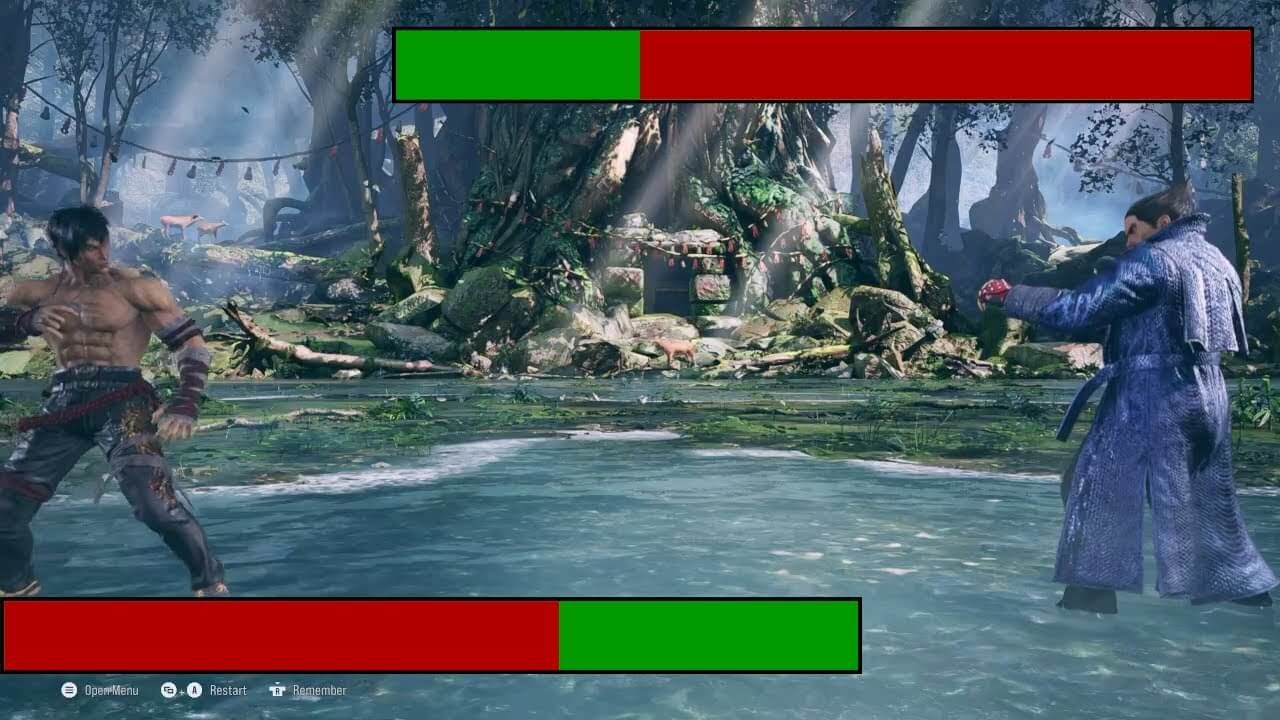
Speedkicks' newest high quality video discusses an interesting concept that plays a big part in the gameplay of Tekken 8.
There are mountains of great Tekken guides out there. Between a large, active community, and Tekken's absurd complexity, many of the more experienced players stepped up to try and help others learn this game.
Usually these videos focus on explaining hidden mechanics, characters guides, and general strategy discussions. Analysis of the game that attempts to pick apart the building blocks of Tekken is not quite as common (and not quite in demand, to be fair), but Speedkicks is second to none when it comes to doing just that.
One of his most popular videos is a great example of that. He takes a look at some of Knee's gameplay during the Tekken 5 era, and very eloquently explains what made that game special, as well as what made Knee special. Videos like this might seem basic on the surface, but reading nuances plays a big role in both improving at the game and appreciating that those nuances exist in the first place.
His newest video similarly explains the nuances that you can find in Tekken 8 by introducing the "Chaos Zones." A cool name, though in essence it feels like a more intuitive way to explain the combination of spacing, frame data, poking, mix-ups, abare, pressure, and many other things by using a sort of visual analogy.
In essence, everything comes down to two zones. The long range attacks, which present a limited amount of threats, and the red blender zone, where the defending player has to guess. While Tekken characters have a lot of moves, they can only use a certain number of those options depending on range and time.
If your opponent only has 10 frames to act before you hit them, you know what options could be coming your way, and use it to put the guessing in your favor. This is an oversimplification (but hopefully not misinterpretation) of the video, but that's why you should probably give it a real watch, SK puts a lot of thought into these explanations.
What's also interesting is that he mentions two misconceptions about how Tekken is played, which exist both among beginners and higher skilled players. The first one is the myth of playing small Tekken. Even though your opponents get fewer windows to act if you barrage them with quick pokes, you likely won't deal enough damage to justify the risk of a single wrong guess that ends with you getting launched. Pokes are better used as a way to threaten your opponent, and give them opportunities to commit their own mistakes.
Which directly leads into another mistake. The dream of simply keeping your distance and then whiff punishing your opponent. This is a regular occurrence in some of the 2D fighters, but it's uncommon for Tekken, because there is little reason for your opponent to take risks on whiffing a move if you're just backdashing away and keeping distance.
To provoke whiffs, you have to show that your opponents need to throw out their keep out moves, otherwise you're going to storm into their face, put them into the blender, and likely walk away with a good chunk of their health.
Despite the title, it's genuinely a fantastic video that every Tekken fan should watch, even if you feel like you have a great grasp of the game already. It offers a rather simple (in a good way) and concise explanation that should help people to grasp an exceptionally complex game.

 T8
T8 MK1
MK1 SF6
SF6 GBVSR
GBVSR 2XKO
2XKO SSBU
SSBU T7
T7 DBFZ
DBFZ BH
BH GGST
GGST SC6
SC6 SG2E
SG2E KI
KI MVS
MVS KoFXV
KoFXV MBTL
MBTL SF5
SF5 MK11
MK11