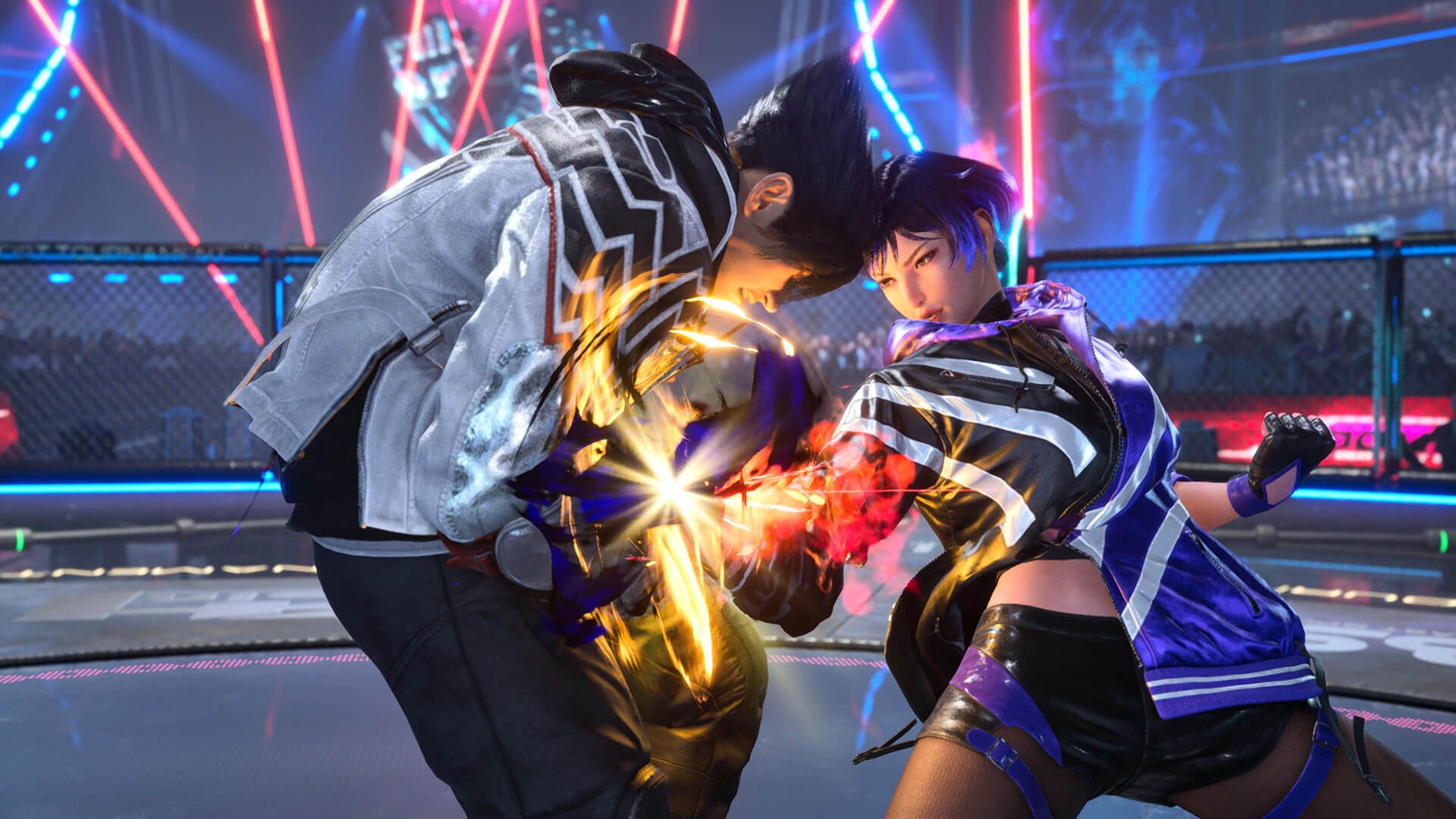
Arika's Mihara-san, who previously worked on helping with online functions of Tekken 7 and Tekken 8, chimes in on the state of Tekken 8 netcode.
Ever since Tekken 7 hit it big and the majority of competitive Tekken matches started happening online, the netcode became a hot and very reoccurring topic of discussion.
Sadly, the reason for it is that it never was all that good. It was functional, but everyone wanted Tekken to follow the modern standard and implement rollback.
When Harada pointed out that Tekken 7 does already use it, we got the infamous "Tekken is 3" meme, where 3 referred to the amount of rollback frames. While he was in all likelihood completely right, even other developers at the time chimed in about the flaws of both Tekken 7 and Harada's explanation.
With all said and done, the semantics meant little when the duck looked, walked, and quacked like a duck, or in Tekken 7's case, like a game with delay based netcode.
When Tekken 8 released, we all felt a notable improvement and definitive signs of rollback at play. Some of it was negative, like stutters when shader compilation impeded performance, or you played against people whose hardware couldn't handle the game, but most of it was positive. Tekken 8, despite its flaws, is a much smoother and responsive game.
But FGC is nothing if not perfectionist, and with other games spoiling us with the wonders of modern rollback netcode, there is still a desire for something better. But, is "better" even possible? According to Mihara-san's explanation, maybe not.
If you're not familiar, Ichiro Mihara is a vice president of Arika, the company behind Street Fighter EX series, Fighting EX Layer, and Tetris: The Grand Master games. He is extremely knowledgable on the topic of online functionality, and has contributed to making both Tekken 7 and Tekken 8 perform as well as they could in online play.
After a completely unprompted reply to his post demanded improvement for Tekken netcode, instead of ignoring or whipping out the block button, Mihara-san went for a very in-depth reply about how netcode works in the context of Tekken.
His thread goes extremely in-depth, so if you want the nitty-gritty details, make sure to read it. However, if we were to simplify it, the crux of the issue comes down to two things: 1) how many things Tekken has to account for at the same time, and 2) laws of physics.
We already heard from Harada that making rollback work in a 3D game is a lot more demanding, but Harada never truly went into details as to why that is. We can intuit and assume some obvious things, since a whole different axis of movement is bound to complicate things, but it's nice to see Mihara-san dive into the details.
For every single frame, the game has to update a lot of information regarding the character's attack and collision hitboxes, their position, rotation, and posture. All of this needs to happen while syncing two machines with different performance and network environments. The task itself is quite demanding, but then physics come into play.
Some might think that having internet with a lot of bandwidth is enough, but latency is far more important. Online video games rarely need much volume of data, they need small packets to make back and forth trips as fast as possible, and what's possible is limited by the way our entire world works. The way internet works right now is still sort of a miracle if you really think about it, but if we wanted for your ping/latency to become better, it would require reworking how internet is routed in different areas, and an entirely new way of sending packets that can outpace even fiber optics, which is not looking very realistic right now.
Can Tekken itself change something to function better? Technically yes, but as Mihara-san points out, it's a tough decision to make. The trade-offs are chosen for the sake of achieving a level of precision that Tekken fans expect, even if they don't necessarily notice or understand the full extent of what this "precision" represents.
In spite of that, the way software (video games) is designed is constantly changing. Right now, Tekken is pushing the limit in terms of what it can accomplish through netcode alone, but it seems possible that in future installments they could restructure parts of the game or rebuild it from the ground up in a way that could allow for precision to become less demanding, moving it closer to 2D games in terms of how taxing the updates and calculations are.

 T8
T8 MK1
MK1 SF6
SF6 GBVSR
GBVSR 2XKO
2XKO SSBU
SSBU T7
T7 DBFZ
DBFZ BH
BH GGST
GGST SC6
SC6 SG2E
SG2E KI
KI MVS
MVS KoFXV
KoFXV MBTL
MBTL SF5
SF5 MK11
MK11