The incident has reignited debate over whether fighting games can, or should, cater to casual audiences
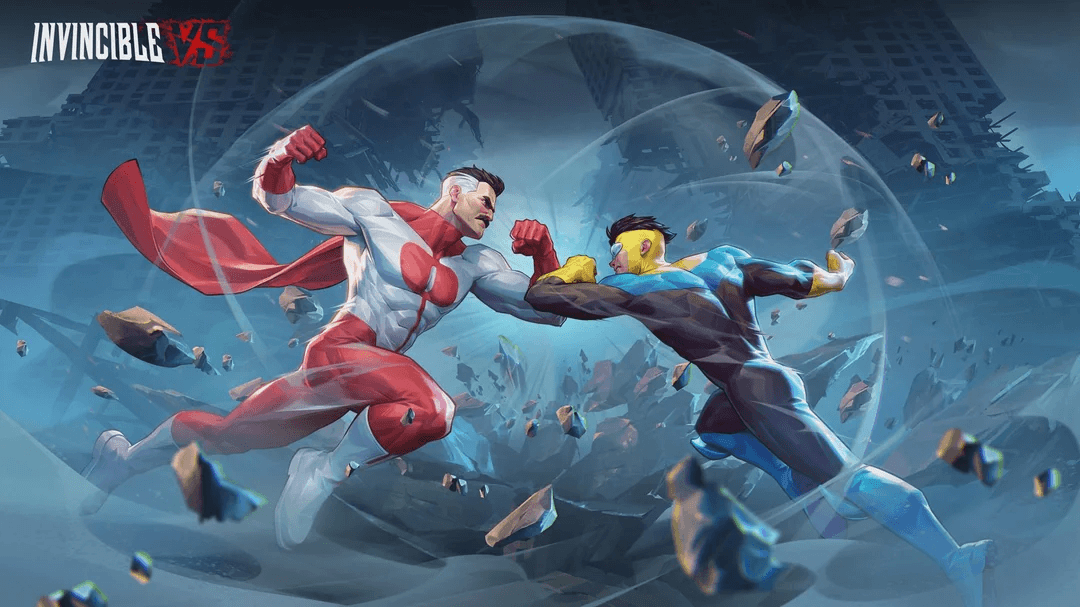
Invincible VS, the upcoming tag fighter from Quarter Up, held its first open beta between April 9th and 12th, 2026. What should have been a straightforward test run quickly revealed a significant problem: rage quitting was rampant, and it exposed tensions that go far deeper than bad online manners.
Rage quitting — the act of disconnecting from an online battle before it ends, typically depriving your opponent of the rewards they would have earned for winning, is not a new phenomenon, but it is one that is especially frowned upon in the FGC.
From the moment the beta launched, stories of players disconnecting the instant momentum turned against them began flooding in. Social media, particularly X, was filled with videos of players reacting to being rage-quitted on. The frustration reached a point where FGC member Big Cheese created a graphic riffing on Invincible's iconic opening sequence, designed specifically to be overlaid on rage-quitting clips.
A Design Incentive Gone Wrong
What made the situation more troubling was that rage quitting was not confined to lower-level players still finding their footing. Videos from multiple Evo winner and FGC legend Justin Wong, as well as multi-game specialist Diaphone, showed the problem was just as present at the elite level. The likely explanation is a design decision by Quarter Up: the top 20 players on the open beta leaderboard were set to receive recognition in the game's credits. Rather than a reward for competing, this appears to have incentivised some players to dodge matches entirely to protect their points standing, turning a community gesture into an accidental invitation to bad behaviour.
The Devs Respond
The rage quitting reached such levels that the official Invincible VS account on X was forced to address it directly. Their statement read:
"We'd also like to clarify that players who leave mid-match are given a loss and will lose LP as a result. For those who don't leave, it may take a few minutes to reflect that win in your profile. Don't leave matches early. It's a beta, get some practice reps in!"
The response was clear and direct, but the fact that it was necessary at all pointed to a problem bigger than any patch could fix.
The Bigger Conversation
The chaos of the beta opened up a debate that the fighting game community has been circling for years: can fighting games meaningfully cater to a casual audience, and should they try?
Invincible VS had initially planned to ship with simplified controls, but following pushback from the community, the developers added the option for traditional motion inputs — a concession to long-time fighting game fans. The game's basis in a major IP meant it attracted both casual and hardcore players from the start, and when those two groups met in-game, the skill gap showed almost immediately. For many casual players, the answer to that gap was to disconnect.
Online creator DotaDoya argued that fighting games are fundamentally incompatible with a casual-friendly design philosophy. His position is that the only path to mass appeal is to make a game so visually and conceptually compelling that casual players are willing to endure the early learning curve rather than walk away from it.
James Chen, commentator and unofficial FGC historian, pushes back on this. He believes fighting games can reach casual audiences, but only if the experience extends beyond the fights themselves. In his view, strong netcode and a rewarding ranked progression system are the kinds of features that can keep less experienced players engaged long enough to develop genuine investment in the game.
Both perspectives reflect a tension the genre has never fully resolved. Games like Street Fighter 6, Mortal Kombat, and Super Smash Bros. Ultimate have all made meaningful inroads with casual audiences, and their commercial success is widely attributed to that broader reach. As fighting games continue pushing beyond their traditional niche, the question of who they are built for will only become more pressing.
Invincible VS launches on April 30th. Whether it can resolve the tensions its beta exposed, between casual and hardcore, between accessibility and depth, remains to be seen.

 T8
T8 MK1
MK1 SF6
SF6 GBVSR
GBVSR 2XKO
2XKO SSBU
SSBU T7
T7 DBFZ
DBFZ BH
BH GGST
GGST SC6
SC6 SG2E
SG2E KI
KI MVS
MVS KoFXV
KoFXV MBTL
MBTL SF5
SF5 MK11
MK11