
 T8
 SF6
 2XKO
 CotW
 GBVSR
 MK1
 SSBU
 T7
 DBFZ
 BH
 GGST
 SC6
 SG2E
 KI
 MVS
 KoFXV
 MBTL
 SF5
 MK11

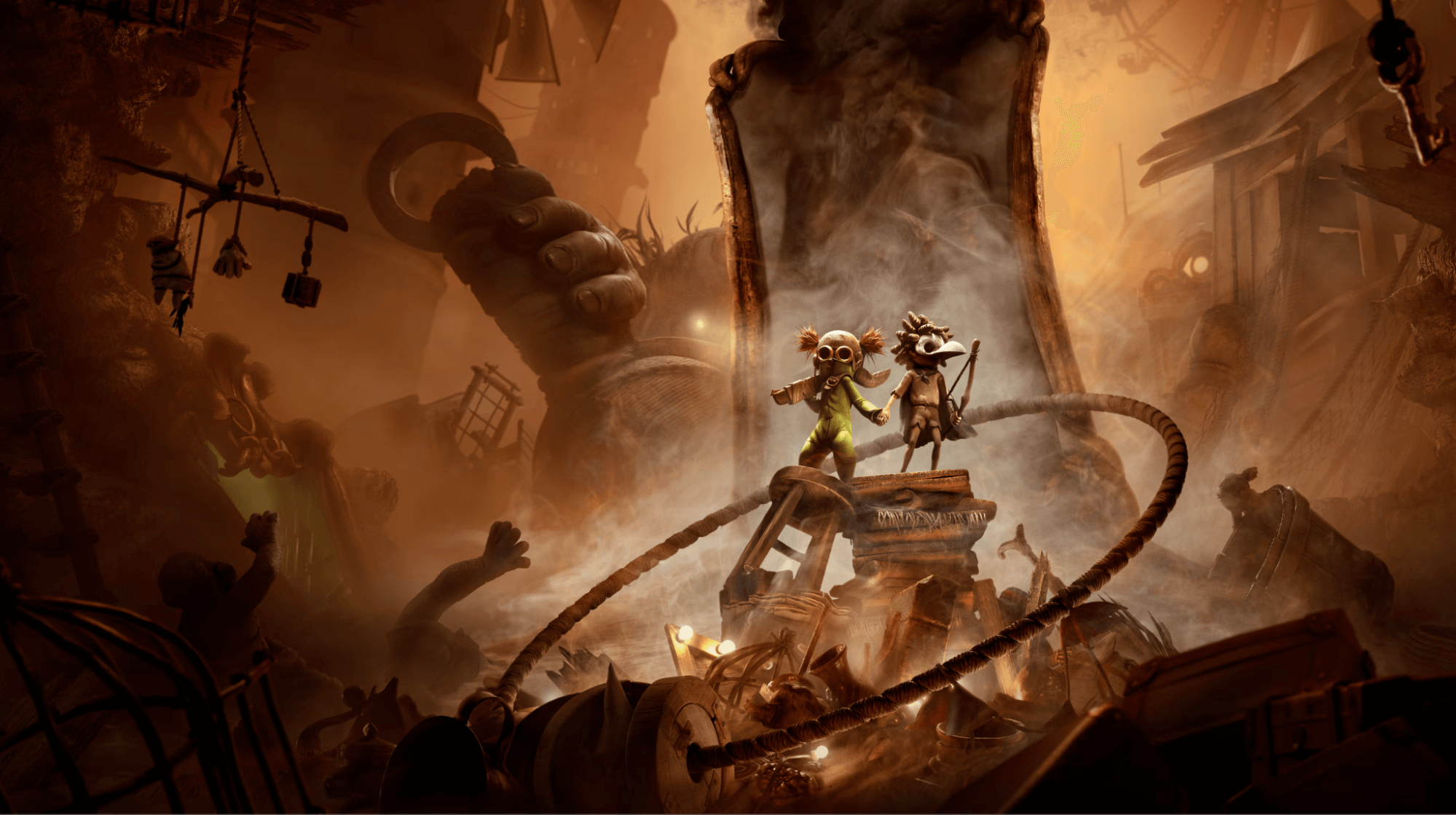
The plastic world has won. In it, all adults are monsters, brainwashed by television and the cult of consumerism, devouring each other and exploiting children. But television and forced education can also turn children into empty-headed puppets. This world can even turn them into monsters — or traitors who let go of your hand at the last moment.
And yet, some can escape, returning to the normal world, even if it means surviving a dangerous journey with a friend who isn’t really there.
This is my interpretation of the events in the Little Nightmares trilogy. I don’t claim to know the truth — this unique series has created its own world, full of vivid characters and mysteries that make you question what it’s all really about. Many people ask the same question about the third instalment, but in a negative way — claiming the new developers made it too derivative and ruined the series. But is it really that bad?
Just like exploring Little Nightmares, sometimes you need a little extra chance to enjoy a game without risk — for example, taking advantage of a Slotozen no deposit bonus can give you a fresh start in an online casino without spending a dime, letting you explore and experiment freely, just as the game allows you to wander its dark, mysterious world.
The mystery of the hole
Released in 2017, Little Nightmares became a cult sensation, plunging us into the atmosphere of a sticky, surreal nightmare. Its impact was heightened by the fact that, for a long time, we didn’t truly understand what this terrible place was, who these monsters were, or whether the girl in the yellow raincoat — constantly hungry and fragile — was the main character, or if Six (as she was later named) would ultimately become the main villain.
The sequel, released four years later, explained how the girl in the yellow raincoat ended up in the Maw from the first game and delivered one of the most shocking endings in gaming history — compilations of players’ heated reactions to what happened to Six and Mono are easy to find online.
Is Six always able to hold your hand and never let go?
In terms of gameplay, both Little Nightmares titles were rather repetitive and somewhat derivative, reminiscent of Limbo and Inside. What truly captivated players was the story, the lore, and the endless mysteries that inspired countless theories and debates. The three DLCs for the first game, as well as the comics based on both entries, expanded the lore for some, but for others, only added to the confusion.
For me, the mystery surrounding the lore — especially the story of the Thin Man from the sequel — can only be compared to the enigmas we tried to unravel in Control and Alan Wake. The only thing that seems clear is that all of it serves as a metaphor for the painful process of growing up, when the pure world of childhood collides with the grotesque world of gluttonous adults.
Two years ago, Bandai Namco Entertainment began releasing audio stories about a girl named Noone and a psychiatrist conducting experiments on her. These tales became a foundation for the series’ lore, answering at least some of its questions. The podcast accompanied the development of the third game, which was no longer being created by Tarsier Studios but by Supermassive Games — the developers of Until Dawn and The Dark Pictures Anthology. The game itself draws heavily from these stories, visualising what we could previously only hear.
From the start, it seemed clear that the third instalment would contain fewer secrets — at least for those who listened to the audio stories. Yet even they need to pay close attention to spot certain details. Its ending, while not as shocking as that of the second game, still carries a familiar tragic note and leaves a lasting sense of melancholy.
The theme of televisions hasn’t gone anywhere.
Repetition is the mother of learning, isn’t it?
That’s why the claim that the plot of the third part is predictable and dull is only partially true. Yes, the story is more traditional and straightforward this time, but it still manages to evoke genuine interest and emotion. From the perspective of expanding and enriching the lore, the trilogy’s significance cannot be overstated — fans of the series should at least give this game a try.
The adventures of the two new protagonists, Low and Alone, perfectly align with the tone of the originals. Even though the trilogy has now been handed to new developers, they clearly understand how to build and sustain atmosphere. Low and Alone explore new locations and encounter new characters, yet true to the series’ traditions, they are constantly running from something — and these tense, sometimes terrifying games of hide-and-seek feel as gripping as ever.
How do you like the idea of hiding from a baby the size of a nine-storey building?
The bosses in the third part follow the same aesthetic — grotesque figures with unnaturally long limbs and necks, like the Thin Man from the second game; bloated, like the cooks and guests from the first; and the spider-like secretary, who feels almost like a carbon copy of the teacher from the sequel.
Still, it makes sense that monsters from the same universe would share a similar design language. That said, the third instalment introduces a few strikingly original creations — the giant baby, for instance, or the ventriloquist with a cannibal doll that behaves like a spoilt, furious child.
There are also several unforgettable sequences: an amusement park drenched in rain and littered with swollen bodies; a desperate escape from the ventriloquist aboard a blimp; and the grotesque scene of his doll hysterically banging a plate on the table, demanding to be served human flesh. Special credit goes to the moment that cleverly references the ending of the second part.
The execution could have been better
Some scenes once again reference moments from previous games — for example, we find ourselves locked in an arena and forced to fend off attackers with a heavy object. This time, though, both characters are involved. Little shoots with a bow, while One finishes enemies off with a wrench, smashing their heads to pieces. That’s because Little Nightmares III introduces co-op for the first time — and each character has a distinct role.
Little uses the bow not only to shoot enemies but also to hit switches, buttons, and ropes to remove obstacles or solve puzzles. One, on the other hand, can use the wrench to break through walls or blocked passages.
So, claims that the third instalment brings nothing new aren’t entirely accurate. The main innovations boil down to co-op and the new doll mechanic that alters the environment — the rest, such as the umbrella-gliding sequence, feel more like minor additions. And yet…
The issue isn’t the simplicity of the puzzles — the series has never relied on complex challenges as its main draw. Here, the riddles at least spice up the routine of dragging boxes and searching for fuses — thank goodness for that! If you’re playing as One, the second character handles most of the support tasks for you.
The main problem lies in the core gameplay formula itself — running left and right, pushing doors, dragging boxes, prying off boards and hatches, and squeezing through ventilation shafts. Between these segments, you hide behind objects and sprint in panic. And so it goes, again and again.
This has always been part of Little Nightmares’ identity, but the earlier games balanced these actions with better pacing and more varied situations. In the third game, repetition becomes more noticeable, and at some point, I began to feel like one of the puppets dangling from the ceiling. The trilogy’s final entry thus feels like it has fewer truly memorable moments.
Another familiar problem for fans is the slightly clumsy controls and awkward camera angles. These issues are worsened by poor visibility — it’s almost always dark — constant collisions with scenery, and the characters’ tendency to fling themselves off edges. Considering how much of the game depends on precise timing during chases and boss fights, I found myself swearing under my breath more than once.
In fact, I startled my cat several times with colourful expletives while playing Little Nightmares II for the same reason, but in the third part, this frustration was compounded by bugs — especially those linked to the new co-op system. This is one of the most terrifying scenes in the game.
In single-player mode, the second character is controlled by AI. Sometimes it’s slow to react — for instance, when your partner takes too long to reach a spot where they need to shoot or give a boost. At other times, it completely freezes — on more than one occasion, Little just stood motionless, forcing me to reload from the previous checkpoint.
Subjectively, I wasn’t fond of the final boss encounter either. It’s overly chaotic — which only amplifies the control issues — and it can’t compare with the tighter, more atmospheric showdown against the Mistress in the first game.
As usual, you can change the characters’ outfits at any time.
Yes, Little Nightmares III has its flaws, but it’s far from a failure. You shouldn’t play it just to kill time while waiting for REANIMAL from Tarsier Studios. The third instalment stands as a self-contained continuation of the series, crafted in the same spirit and making a meaningful contribution to its overarching lore. It also introduces co-op play, which, despite its imperfections, feels like a natural evolution for the series. Not everything works flawlessly, but it’s still good that the game exists.
Conclusion
Pros: The story is more predictable than before but still engaging; the game helps consolidate the series’ lore; the bosses remain striking and unsettling; the chases are tense and exciting; co-op is well implemented; there are many vivid, memorable sequences; outstanding graphics and sound.
Cons: Some repetition in locations; optimisation, control, and camera issues; frequent repetitive actions, especially early on; noticeable bugs.