And it's important that you don't.
You might find it odd to see a news post about an anime dub on a website that is entirely dedicated to fighting games and only fighting games. But let me ask you this, can you think of any memorable voice lines from any fighting game you've ever played? Whether it's Ryu announcing him moves, Scorpion pulling you in, or Neco-Arc screeching in a weirdly adorable way, the answer is going to be yes.
Voice acting has always been a crucial component of fighting games. In practical terms, it usually serves as a sound cue for player actions, but more subjectively, it's one of the few ways to quickly communicate the character's personality. Imagine a world where Kazuya's voice doesn't deliver every ounce of hatred he has for his opponents, or one where Blanka puts out generic barks instead of his wild roars.
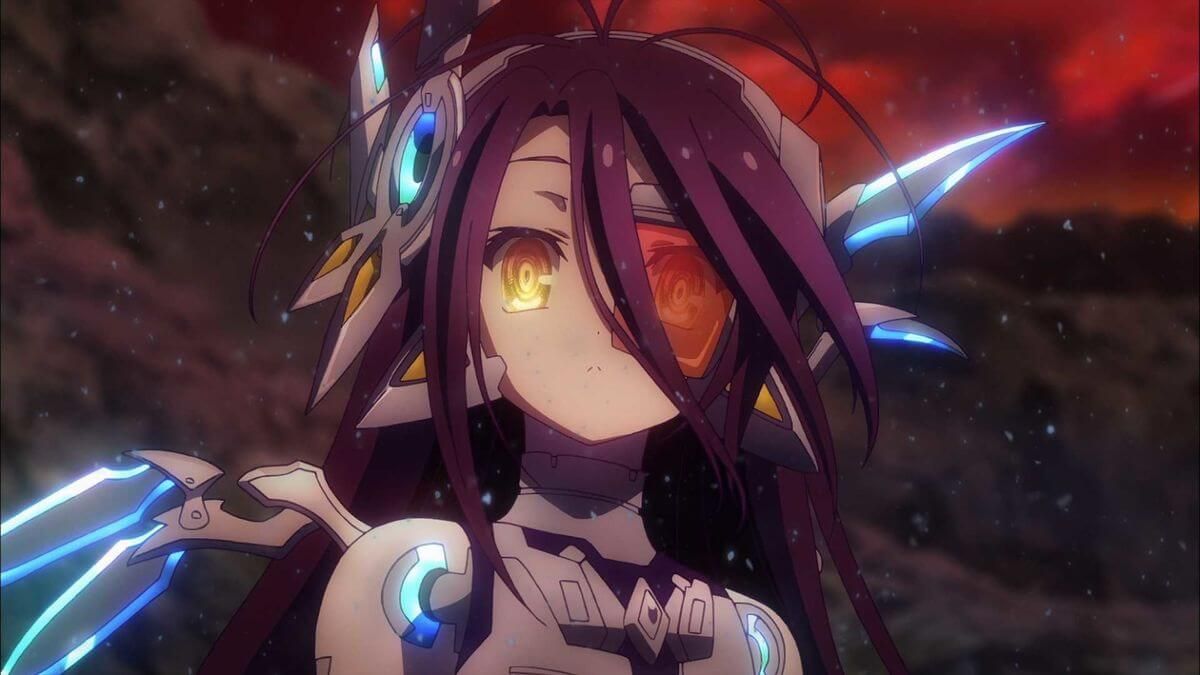
That is the world that you can expect if Amazon gets what they want and AI dubbing becomes normalized. The company has recently rolled out their new experimental project of providing AI generated dubs for some of the anime that can be found on their streaming services. If you're wondering just how bad it sounds, there is an example you can find below:
At least in this case, the anime in question (No Game No Life Zero) already had an English dub that fans can fall back on. This is not the case for another anime that this feature was tested on – Banana Fish. If you saw this, you'd probably not get the impression that this is a critically acclaimed anime that fans of the manga have been waiting for decades.
Naturally, this caused a massive uproar among the anime community. Despite some parts of the community also having issues with proper dubs and localizations made by flesh-and-blood humans, it seems like absolutely nobody was down to tolerate this. Which led to Amazon retracting the AI dub for Banana Fish, but only in English, so it's hardly a victory.
Katrina Leonoudakis, a game localization producer who previously worked as a translator on manga, sentai shows, and more, has chimed in with professional insight regarding this situation. She recalls a prior experience, when the team she worked with got a word from upper management to "start using more AI."
At first, it was limited to implementing it organizational tasks and things like writing emails, but since it wasn't useful (or good) at doing that, nobody in their department ended up actually making use of the AI tools.
Later on, this push for AI extended to their actual workflow and translation, with an argument that it would save money and allow translators to simply edit the AI translation instead of doing everything from scratch. Anyone who dealt with professional translation will tell you how unhelpful this is. If you want something that reads properly, you need the knowledge and experience of professional translators who carefully consider context and function of every single word.
In private messages, everyone agreed that this was bad for the shows, bad for consumers, and bad for translators. Thousands of dollars were spent on AI licenses to do lower quality work and do it slower. The worst part is that since this is becoming commonplace, it puts pressure on companies to lower their standards and concede to putting out lower quality translations. Otherwise, all the contracts will go towards their competition that makes cheaper subs that the audience will eat up all the same.
You don't want low quality, translators don't want to screw over the show and give you something subpar. But in this situation, the only recourse is for people to let these companies know that this is unacceptable.
It might seem unrelated to fighting games, but you have to remember how interconnected the localization industry is. The same people who voice your favorite fighting games (regardless of whether it's English, Japanese, or any other language), are also doing voiceovers for movies, TV shows, anime, and basically anything else they can get their hands on.
If we allow something like this to become the norm, it will only become more widespread. And if the average consumer considers it to be even barely "good enough," there will be no going back. Any piece of media that you've grown to love will take massive nosedives in quality, and that's not even counting all the other negative consequences of AI, which said average consumer will likely never care about. That's why it's important to curb this rot as early as possible, and to make your voice heard.

 T8
T8 MK1
MK1 SF6
SF6 GBVSR
GBVSR 2XKO
2XKO SSBU
SSBU T7
T7 DBFZ
DBFZ BH
BH GGST
GGST SC6
SC6 SG2E
SG2E KI
KI MVS
MVS KoFXV
KoFXV MBTL
MBTL SF5
SF5 MK11
MK11